Home renovations come with many decisions to be made. You’re redoing the look of your home, which is a big deal. Adding a touch of new paint can truly breathe new air into the environment. Sometimes, however, you want to go beyond paint by adding an eye-catching centerpiece with increased texture. Crown moulding is often used to add extra detail to your ceilings. But what if you’re searching for something a little different?
Fretwork could be exactly what you’re looking for. This ornamental design can add sophistication and style in just a few easy steps.
What is fretwork?
Before getting into the details of application, let’s first talk about fretwork’s background. Fretwork is a decorative design that’s cut into a material such as wood which was traditionally done using a machine like a fretsaw or a jigsaw. The design has a steep history, with its use dating back many millenia. Records show Egyptian artisans used fretted inlays to decorate furniture as much as three thousand years ago and among the many precious treasures found in King Tutankhamun’s tomb were actually pieces adorned with this ornate technique.
Today, fretwork is used in multiple ways to add a touch of beauty to buildings and furniture alike. Some examples of places where you can most often find this work include:
- At the top of doorways
- On walls
- Around windows and mirrors
Some examples of fretwork in the US bring to mind images of ornate trim around the top of residential porches on historic Victorian-style farmhouses and estates.
Various styles of fretwork have evolved in different cultures and for a large part of its history, fretwork pieces were made by hand. In the not-so-distant past, contractors or woodworkers would need to be commissioned to complete the work, making for involved projects.
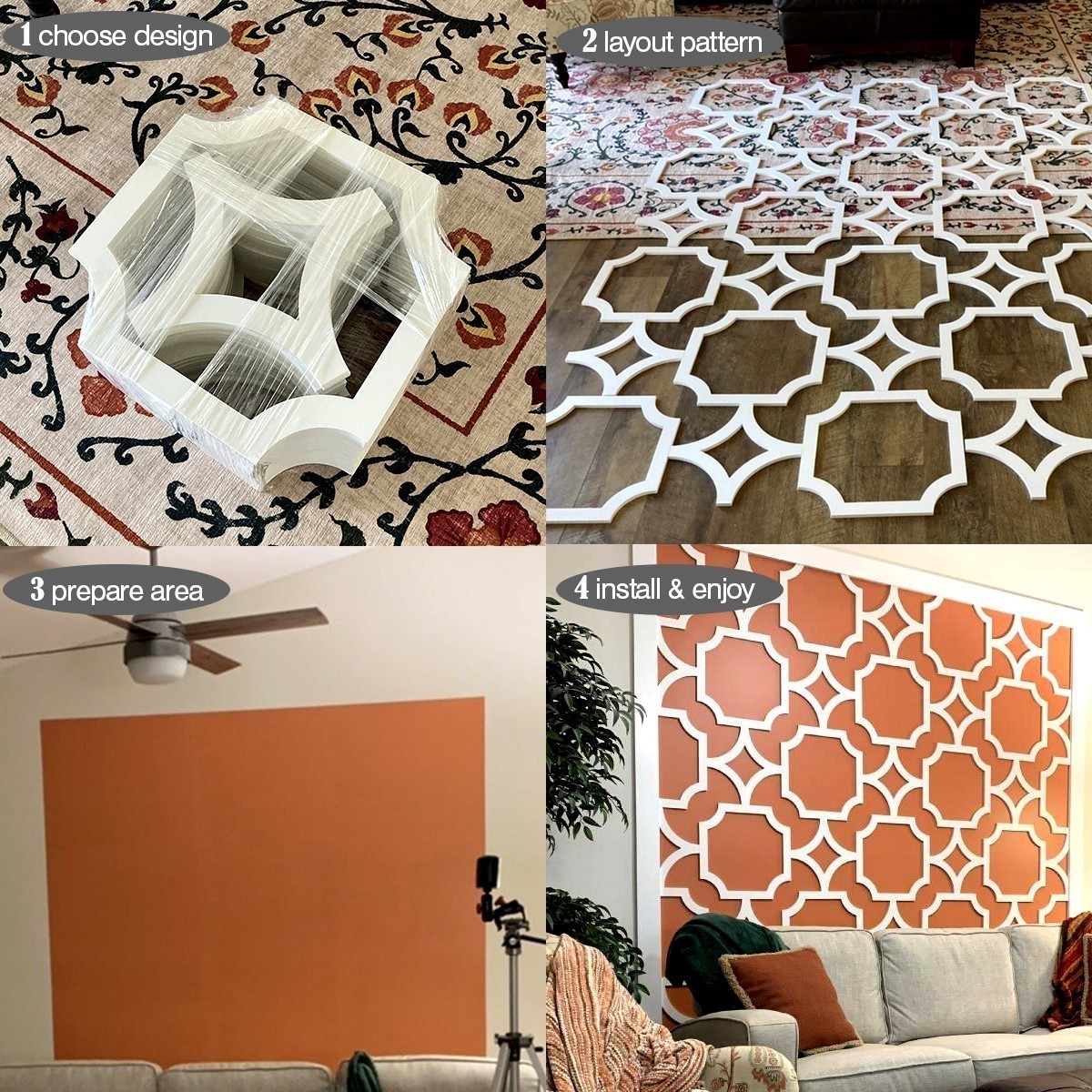
Today, the process is easier. Lasers can be used to cut pieces, reducing cost and increasing the availability of this style. In line with this development, one of the most common uses for fretwork now comes in the form of fretwork wall panels. Using simple DIY fretwork kits, you can now transform the look of your home in just one day, (or even a single afternoon!)
Fretwork is easy to install in any room
Fretwork is now amazingly easy to add to your interior. You can do it all yourself! By using adhesive tape and small brad nails you can create the look you want.
Simple steps for laying fretwork:
- Lay out your installation design on the floor or table
- Rub your installation surface with sandpaper to make sure it’s smooth
- Wipe your wall with a damp cloth to clean it
- Mark your installation points on the wall with chalk or light pencil using a level
- For a two-piece design, start in the center of the wall and work out
- For a one-piece design, begin in one corner and work towards the other
- Install the panels using a tiny bit of adhesive tape on the back, and brad nails
The tools you’ll need to complete your fretwork wall panel design include:
- Level
- Hammer or drill
- Standards adhesive
- Small brad nails
- Chalk or pencil
- Measuring tape
- Utility knife
Like any DIY project, installing fretwork takes some patience, forethought and planning.
Some tips: Know that it’s likely you’ll have to cut some pieces a bit with a utility knife to make an exact fit in your design. By sanding down each edge you help ensure that you’ll have a tightly woven wall.
Also, make sure you paint your fretwork before installing it. Depending on the look you’re going for, you may want to actually paint it a contrasting color, compared with the wall. Some ideas include painting the wall area a bright color, and keeping your fretwork lighter, or vice versa.
Normally, you want each piece to line up directly against the others. For a different look, you can also leave a gap between each panel. Use a creative approach to find what you like best!
Where should you install them? Fretwork wall panels can look great in any room including your kitchen, living room, office space, bathroom, bedroom, or den.
It’s Available in Many Styles, Sizes, and Materials
Fretwork comes in as many looks as you can imagine. The sky truly is the limit!
Styles of Fretwork
There is a huge variety of styles and designs to choose from. Look at the lines already present in your furniture and flooring. Do you want to contrast it, or add to it? This can be a good starting point.
Sizes of Fretwork
Fretwork for walls also comes in a wide variety of sizes. If your room is quite large, consider going with an equally large panel design. For smaller areas, consider using smaller panels with a more intricate design. There are always exceptions to the rule, however, and choose what you think works best for your situation.
Materials
The materials typically used to make fretwork these days include many different types of wood, PVC, and vinyl, to name just a few. Typically, it’s wise to use wood fretwork to add warmth and depth to walls in places like your living room or bedroom. These are rooms that don’t have a high moisture content. You don’t want to risk having your fretwork expand, shrink, or buckle. The beauty of wood is that you can enjoy it’s natural color or stain it for a particular look. Painting the wood is always an option, too.
For rooms like the bathroom, entry way, or kitchen, PVC or vinyl fretwork can work best. This type of fretwork tends to come in a solid color to add texture and balance. Each piece of fretwork is precision cut for an ideal and consistent look. You can count on it!
Choosing fretwork to improve and advance the look of your home is a great way to engage in a simple DIY transformation. At PCI Enterprises, we have a wide variety of fretwork to choose from.
 Architectural PVC is making its way onto more homes, into more commercial spaces, on the shelves of local lumber yards and selling on your favorite online home improvement store. Why is this material making waves and changing the way planning, building, and construction is done?